Pickleball insights from Debbie's court
Welcome to our blog, where we share valuable tips, engaging stories, and the latest news from the world of pickleball. Whether you are just starting or aiming to refine your advanced strategies, you will find something here to elevate your game and passion for the sport.

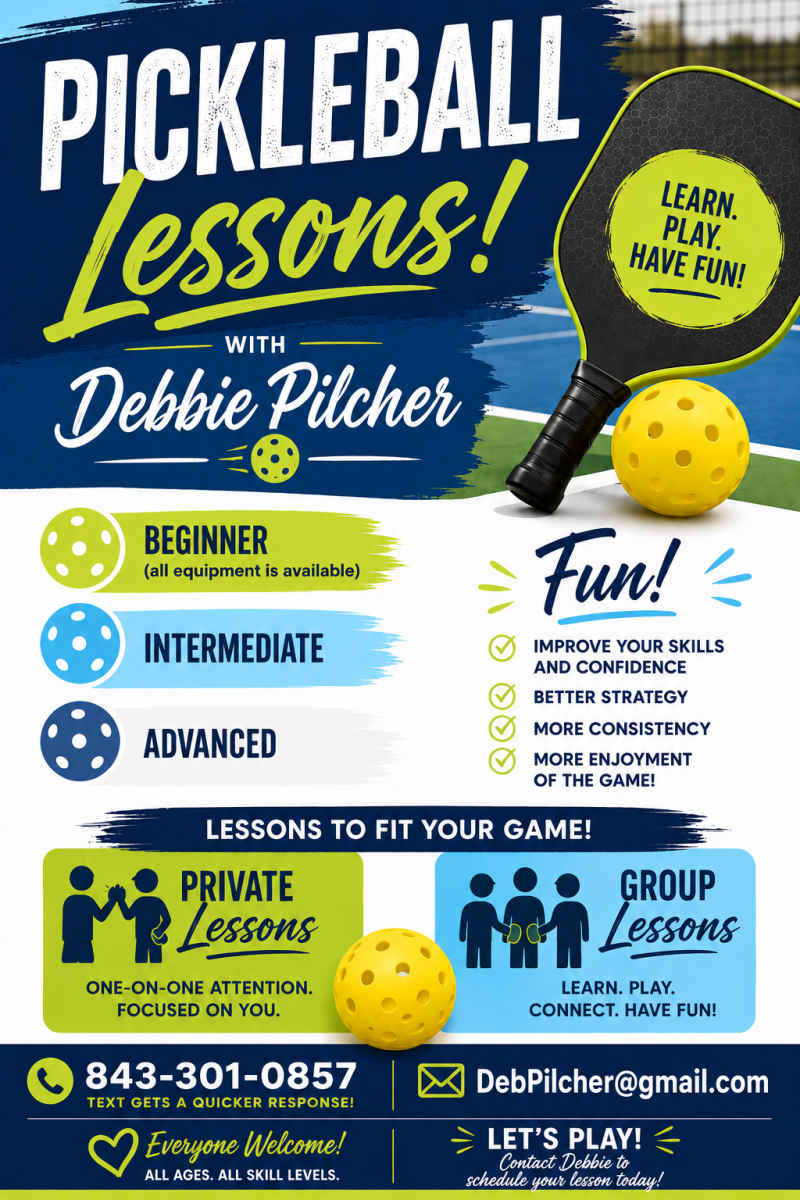

Stories from the court: A beginner's journey
Follow the inspiring journey of a complete beginner as they discover the joy and challenges of pickleball. From their first serve to their first tournament, this series captures the essence of learning a new sport and growing as an athlete. Perfect for anyone new to pickleball or considering picking up a paddle.
Beginner Pickleball Players: How to Start Playing with Confidence
Pickleball is easy to learn, social, and suitable for a wide range of ages and fitness levels. It combines elements of tennis, badminton, and table tennis, but beginners do not need experience in any of those sports to get started.
With a paddle, a ball, and a basic understanding of the rules, most new players can begin rallying during their first session.
What Is Pickleball?
Pickleball is played on a court with the same outer dimensions as a badminton court. Players use solid paddles to hit a lightweight, perforated plastic ball over a low net.
You can play:
- Singles, with one player on each side.
- Doubles, with two players on each side.
- Recreationally, for exercise and social connection.
- Competitively, through leagues, ladders, and tournaments.
Doubles is the most common format and is often the easiest starting point because each player covers less space.
Equipment You Need
You do not need expensive equipment for your first game. Many clubs and beginner classes provide paddles and balls.
Item Beginner recommendation Paddle Choose a comfortable, midweight paddle with a grip that fits your hand. Balls Use an indoor or outdoor pickleball suited to the court. Shoes Wear court shoes with lateral support and non-marking soles. Clothing Select breathable clothing that allows easy movement. Water Bring enough to stay hydrated throughout the session.
Avoid running shoes if possible. They are designed mainly for forward movement, while pickleball requires frequent side-to-side steps.
Learn the Basic Rules
Beginners do not need to memorize the complete rulebook before playing. Start with these essential rules.
1. Serve diagonally
The serve begins from behind the baseline and travels diagonally into the opponent's service court. A traditional serve is hit underhand, while a legal drop serve may also be used.
Each server normally receives one attempt. A serve that lands in the non-volley zone, beyond the baseline, or outside the correct service court is a fault. pickleball.ph
2. Follow the two-bounce rule
After the serve, the receiving team must let the ball bounce before returning it. The serving team must also let that return bounce before hitting it.
After those first two bounces, either team may hit the ball after a bounce or volley it out of the air.
3. Stay out of the kitchen when volleying
The area extending seven feet from each side of the net is called the non-volley zone, commonly known as the kitchen.
You may enter the kitchen to play a ball that has bounced. However, you cannot volley while standing in the kitchen or allow your momentum to carry you into it after a volley.
4. Understand traditional scoring
In traditional pickleball scoring, only the serving team can score. Recreational games are commonly played to 11 points, and the winner must lead by at least two points. Tournament games may be played to 15 or 21. pickleball.ph
In doubles, the score is usually announced with three numbers:
Serving team's score - receiving team's score - server number
For example, 4-2-1 means the serving team has four points, the receiving team has two, and the team's first server is serving.
5. Recognize common faults
A rally ends when a player or team:
- Hits the ball into the net.
- Hits the ball outside the court.
- Allows the ball to bounce twice.
- Volleys from inside the kitchen.
- Serves outside the correct service court.
- Violates the two-bounce rule.
How to Start Playing
Take an introductory class
A beginner clinic is one of the simplest ways to learn correct technique. Introductory lessons commonly cover rules, scoring, court positioning, serving, and basic strokes. Some clubs provide the court, paddle, balls, and coach, allowing beginners to arrive without purchasing equipment first. sandiegopickleball.com clubpickleballusa.com
Group classes also introduce you to players at a similar level, making it easier to find future practice partners.
Practice the essential shots
Focus on control before power. A beginner's first practice sessions should include:
- Serve: Develop a simple motion that reliably puts the ball in play.
- Return: Hit a deep return and move toward the non-volley-zone line.
- Groundstroke: Practice forehand and backhand shots after one bounce.
- Volley: Use a short, controlled motion rather than a large swing.
- Dink: Hit a soft shot that lands in the opponent's kitchen.
- Third-shot drop: Send a soft ball into the kitchen after the return of serve.
Clinics for newer players commonly emphasize strokes, grips, footwork, serving, and structured drills. anchoragepickleballclub.com
Join beginner open play
Look for sessions labeled beginner, novice, introductory, or 2.0-2.5. These groups usually provide a more comfortable learning environment than unrestricted open play.
Guided novice play is particularly useful because an instructor can correct positioning, explain scoring, and provide feedback during actual games. sandiegopickleball.com
Simple Beginner Strategy
Good positioning and consistency are more valuable than hard shots.
- Put the serve in play. A powerful serve has no value if it regularly misses.
- Return deep. A deep return keeps opponents farther from the net.
- Move toward the kitchen line. Most doubles rallies are controlled from the non-volley-zone line.
- Keep the ball low. High balls give opponents opportunities to attack.
- Aim through the middle. This reduces your margin for error and can create uncertainty between opponents.
- Stay beside your partner. Move forward, backward, and sideways as a team.
- Be patient. Wait for an attackable ball instead of trying to end every rally immediately.
Common Beginner Mistakes
Trying to hit too hard
New players often swing as though they are playing tennis. Pickleball rewards placement, patience, and compact technique. Relax your grip and use a shorter swing.
Remaining near the baseline
After returning the serve, move forward when it is safe. Staying at the baseline gives opponents more angles and makes soft shots harder to reach.
Running into the kitchen
Learn to stop before the kitchen line. Maintain balance so that your momentum does not carry you into the zone after a volley.
Watching the shot instead of recovering
After hitting the ball, return to a balanced ready position. Keep your paddle in front of your body and prepare for the next shot.
Avoiding stronger players completely
Playing only with beginners can limit improvement. Once you understand the rules and scoring, occasional games with patient intermediate players can teach you better positioning and shot selection.
Pickleball Etiquette
Pickleball is known for its welcoming community, and good court behavior helps preserve that atmosphere.
- Introduce yourself before playing with a new group.
- Call the score clearly before every serve.
- Make honest line calls and give close calls to your opponents.
- Avoid unsolicited coaching unless another player asks for advice.
- Return stray balls safely rather than hitting them through an active court.
- Rotate fairly when other players are waiting.
- Prioritize safety and avoid stepping onto another court during a rally.
A Four-Week Beginner Plan
Week Main focus Suggested practice1Rules and consistency Learn scoring, serve legally, and sustain short rallies.2PositioningPractice returns, kitchen-line movement, and basic volleys.3Soft game Work on dinks, controlled drops, and keeping the ball low.4Match play Join beginner open play and apply simple doubles strategy.
Two sessions per week can produce noticeable progress. One session can focus on drills, while the other can involve recreational games.
Final Thoughts
The best way to begin pickleball is to learn a few essential rules, take an introductory lesson, and start playing with other beginners. Do not wait until you understand every rule or own premium equipment.
Your first goal is not to hit spectacular winners. It is to serve consistently, return the ball, move safely, and enjoy the rally. Confidence and strategy will develop naturally as you spend more time on the court.

Upcoming tournaments and events
Stay informed about local and national pickleball tournaments and events. We will highlight key dates, registration information, and results. Whether you are looking to compete or just watch, our updates will keep you in the loop. Relevant for all pickleball enthusiasts and competitive players.